Homeowners facing recurring pest problems often debate whether to call an exterminator or try electronic pest control devices. These plug-in gadgets promise chemical-free, humane pest deterrence using ultrasonic waves, electromagnetic pulses, or ionic emissions. But do they actually work, and which type makes sense for your home? This guide cuts through the marketing hype, examines what the science says, and helps you make an well-informed choice about whether electronic pest control fits your situation, or whether you’re better off with traditional methods.
Table of Contents
ToggleKey Takeaways
- Electronic pest control devices emit ultrasonic waves, electromagnetic pulses, or ions to repel pests without chemicals, but scientific evidence supporting their effectiveness is limited and mixed.
- Peer-reviewed research shows ultrasonic repellers have little impact on most insects and that rodents quickly develop habituation, returning to treated areas within days.
- Proper placement and setup are critical—ultrasonic units need clear, unobstructed paths in rooms under 1,000 square feet, while electromagnetic devices require outlets on the same electrical circuit for coverage.
- Electronic pest control works best as a preventive measure or part of an integrated strategy, never as a sole defense against active infestations or serious pest problems.
- Budget $20–$80 per unit and plan for multiple devices across your home; combine electronic methods with exclusion work, food storage, and monitoring traps for better results.
What Are Electronic Pest Control Devices and How Do They Work?
Electronic pest control devices are plug-in or battery-powered units designed to repel pests without chemicals, traps, or physical barriers. Unlike conventional pesticides or snap traps, these devices claim to create an environment that rodents, insects, and other pests find intolerable.
Ultrasonic models emit high-frequency sound waves (typically 20–65 kHz) above the range of human hearing. The theory: these sounds irritate pest nervous systems, driving them away. Most units plug directly into standard 120V outlets and cover a single room or zone.
Electromagnetic devices send pulses through a home’s existing wiring, theoretically turning walls into pest deterrents. Manufacturers claim the pulses disrupt nesting and feeding patterns within the structure itself.
Ionic units release negative ions that purportedly repel insects by altering air quality or disrupting their navigation. These are less common and often marketed alongside air purification claims.
All three types share one selling point: no poisons, no dead animals to dispose of, and minimal ongoing maintenance. Just plug in and forget, at least, that’s the pitch. Reality is more complicated, which we’ll address when we look at effectiveness.
Types of Electronic Pest Control Solutions for Your Home
Ultrasonic Pest Repellers
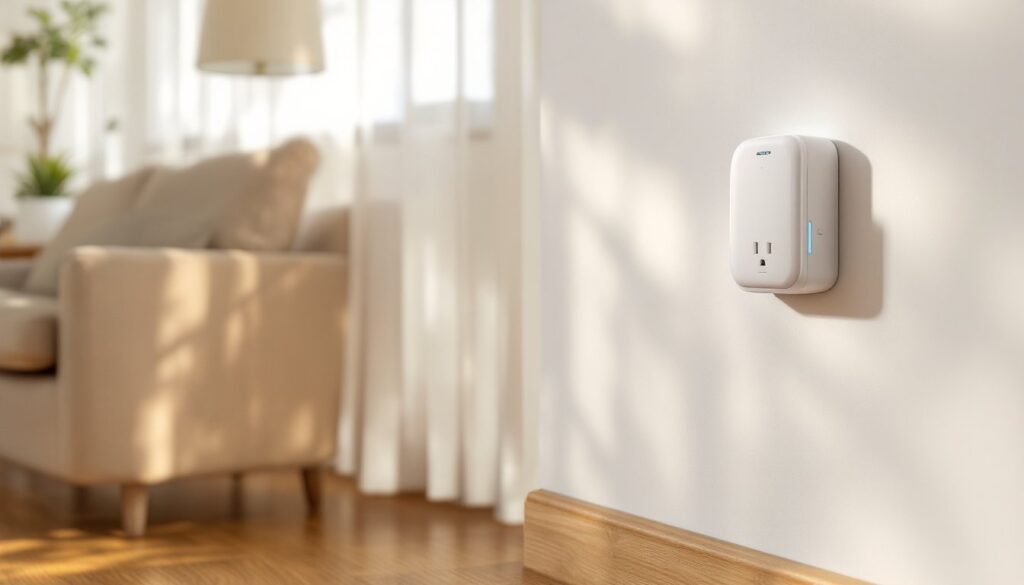
Ultrasonic repellers dominate the market. These compact units range from nightlight-sized plug-ins to larger tabletop models. Most emit variable-frequency sound waves to prevent pests from acclimating.
Coverage area varies widely, budget models claim 800–1,200 square feet, while premium versions advertise up to 5,000 square feet. Keep in mind that ultrasonic waves don’t pass through walls or furniture, so one device per room is the practical standard. Solid objects, curtains, and even soft furnishings absorb or deflect the sound.
Power consumption is negligible, typically 3–10 watts. You can leave them running 24/7 without noticing a bump in your electric bill.
Some newer models include LED indicators or dual-mode operation (ultrasonic + electromagnetic). Test reports from product reviewers show wide variation in build quality and actual frequency output, so brand reputation matters here.
Electromagnetic and Ionic Devices
Electromagnetic models send pulses through your home’s electrical wiring. The concept: pests living inside walls or crawl spaces encounter the electromagnetic field and relocate.
Installation is straightforward, plug the unit into any outlet. Manufacturers claim coverage for an entire floor or up to 3,000–5,000 square feet, depending on your electrical layout. Homes with multiple breaker panels may need more than one unit.
Real-world limitation: the pulses only travel through wiring that’s connected on the same circuit. If your garage is on a separate panel, don’t expect coverage there.
Ionic devices are niche products. They plug in like ultrasonic models but release negative ions instead of sound. Evidence supporting their pest-control effectiveness is scarce, and they’re often bundled with air-quality claims that have little to do with rodents or insects. If you’re serious about pest control, skip these and focus on ultrasonic or electromagnetic options.
Effectiveness: What the Science Says About Electronic Pest Control
Here’s where the pitch meets the pavement: peer-reviewed research on electronic pest control is limited, and what exists is mixed at best.
Studies from Kansas State University and similar institutions found that ultrasonic devices showed little to no effect on cockroaches, ants, or spiders. Rodents sometimes exhibited short-term avoidance behaviors in lab settings, but habituation occurred quickly, within days, mice and rats returned to treated areas.
The Federal Trade Commission has taken action against manufacturers making unsubstantiated claims. In short, if a product promises to eliminate all pests from your home with zero evidence, that’s a red flag.
Why the inconsistency? Ultrasonic waves are line-of-sight. They bounce off hard surfaces and are absorbed by soft materials like carpet, upholstery, and drywall. A device might work in a bare, tile-floored room but fail in a furnished living space. Pests also adapt, what bothers them initially may become background noise.
Electromagnetic devices have even less independent testing. Manufacturer claims rarely cite third-party verification, and home technology experts note the lack of measurable electromagnetic output in many models.
Bottom line: Electronic pest control may offer mild, temporary deterrence in specific situations (e.g., an empty garage, a workshop, or as part of an integrated pest management plan). Don’t rely on them as your sole defense, especially if you’re dealing with an active infestation. Serious rodent or insect problems require traps, exclusion work, or professional treatment.
Choosing the Right Electronic Pest Control Device for Your Needs
If you decide to try electronic pest control, whether as a preventive measure or alongside other methods, here’s how to shop smart.
Identify your pest type. Most devices are marketed for rodents (mice, rats) and insects (roaches, spiders, ants). If you’re dealing with larger pests (squirrels, raccoons) or specific insects like bed bugs, these units won’t help. Bed bugs, in particular, are unaffected by ultrasonic frequencies.
Match coverage to your space. Measure the room where you’ll use the device. Ultrasonic models work best in open areas under 1,000 square feet per unit. For multi-room coverage, budget for one device per room, or choose an electromagnetic model if your home’s wiring supports it.
Check for adjustable settings. Variable-frequency models cycle through different sound waves to reduce pest habituation. Units with a single fixed frequency are less effective over time.
Look for certifications or testing. Reputable manufacturers provide FCC compliance info and UL listing for electrical safety. Be skeptical of brands that don’t.
Read independent reviews. Tested product recommendations from consumer labs often reveal performance gaps that marketing materials gloss over. Pay attention to long-term user feedback, did the device work after 30, 60, or 90 days, or did pests return?
Budget appropriately. Quality ultrasonic units run $20–$50 each. Electromagnetic models range from $30–$80. If you’re covering a whole house, expect to spend $100–$200 total. Anything priced significantly lower often underperforms or fails within months.
Installation and Placement Tips for Maximum Results
Proper placement makes the difference between marginal results and total waste of money.
For ultrasonic devices:
- Plug directly into an outlet 2–4 feet off the floor. Avoid power strips or extension cords, which can reduce output.
- Position the device facing open floor space, not a wall or furniture. Ultrasonic waves need a clear path.
- Keep the area in front unobstructed. Move sofas, bookshelves, or storage bins at least 3 feet away.
- Place one unit per room. Hallways, closets, and adjacent spaces require separate devices.
- Avoid bathrooms and high-humidity areas unless the unit is rated for moisture exposure. Most aren’t.
For electromagnetic models:
- Plug into a central outlet on the circuit you want to protect. Ground-floor outlets often provide the broadest wiring coverage.
- Test on a single floor first. If you don’t notice reduced pest activity after 3–4 weeks, the pulses may not be reaching problem areas.
- Don’t expect coverage beyond your home’s wiring. Detached garages, sheds, or guest houses need separate units.
General tips:
- Combine with exclusion work. Seal cracks, gaps around pipes, and foundation openings with steel wool and caulk. No device will work if pests have easy entry points.
- Remove attractants. Store food in airtight containers, fix leaky faucets, and eliminate clutter. Pests stay where resources are plentiful.
- Give it 2–4 weeks. Manufacturers claim results within days, but realistic timelines are longer, and again, results may be minimal.
- Monitor for activity. Set a few snap traps or glue boards in corners. If you’re still catching pests after a month, the electronic device isn’t doing the job.
Safety note: These devices pose no risk to humans or pets at normal settings. Some dogs and cats may hear ultrasonic frequencies and show mild discomfort (head-shaking, leaving the room). If that happens, relocate the unit or discontinue use.
Electronic pest control isn’t a magic bullet. For serious infestations, contact a licensed pest control professional. If you’re using these devices as a preventive tool or part of a broader DIY strategy, set realistic expectations and keep traditional methods on standby.