A water softener making noise at 2 a.m. is unsettling. Whether it sounds like water running when it shouldn’t be, or there’s a loud grinding noise from the basement, these sounds usually signal something specific. The good news? Most water softener noises aren’t disasters waiting to happen. They’re communication. The system is telling you what’s wrong, and once you know how to listen, troubleshooting becomes straightforward. This guide walks through the common sounds, what causes them, and how to fix most issues without calling for expensive service.
Table of Contents
ToggleKey Takeaways
- A water softener making noise typically signals a specific problem such as a stuck valve, clogged injector, or improper drain line installation rather than a system failure.
- Different noises indicate distinct issues: running water suggests a malfunctioning timer or blockage, grinding points to worn gears, and water hammer occurs when valves close too quickly.
- Regeneration cycles occurring during off-peak hours (usually 2–3 a.m.) are normal, but excessive noise can be reduced by adjusting the timer or securing the drain line with proper 1/2-inch minimum ID tubing.
- Most water softener noise problems can be resolved through DIY troubleshooting including drain line inspection, venturi cleaning, salt bridge removal, and manual cycle testing.
- Call a professional if the motor hums without turning, water leaks from seals, or the unit is over 15 years old with multiple issues, as these typically require specialized tools and expertise.
- Regular maintenance checks such as testing water pressure (keeping it between 40–80 psi) and inspecting resin bed screens can prevent many noise issues before they start.
Common Types of Water Softener Noises and What They Mean
Water softeners produce several distinct sounds, and recognizing them helps pinpoint the problem.
Running water noise is the most frequent complaint. If the water softener sounds like water running constantly, it’s typically a stuck valve, a malfunctioning timer, or a blockage preventing the regeneration cycle from completing. This wastes water and salt, and it’ll spike your utility bill if left unchecked.
Grinding or whirring usually comes from the motor driving the control valve during regeneration. A little mechanical hum is normal, but loud grinding suggests worn gears, debris in the valve body, or a motor on its way out.
Hissing or air-release sounds often point to air in the resin tank or brine line. They’re harmless initially but can indicate a leak or a venturi valve blockage if they persist.
Banging or hammering (water hammer) happens when valves close too quickly, causing pressure spikes in the plumbing. This isn’t unique to water softeners but becomes noticeable during regeneration when large volumes of water stop abruptly.
Clicking or ticking from the timer or control head is normal during cycle changes. If it’s constant or erratic, the timer mechanism may be failing.
Why Is My Water Softener Making Noise During Regeneration?
Regeneration is when the system backwashes the resin bed, draws brine from the salt tank, and rinses everything clean. It’s inherently noisier than standby mode because water moves at high volume through valves, injectors, and drains.
A water softener making noise at night is often just regeneration happening on schedule. Most units default to 2–3 a.m. regeneration when household water demand is lowest. You can reprogram the timer to run earlier in the evening if the noise is disruptive.
If the noise is excessive, inspect the drain line. A kinked, improperly secured, or undersized drain line amplifies rushing water sounds. The drain line should be rigid (or at least well-supported flexible tubing) and discharge into a standpipe, laundry sink, or floor drain without restriction. Use 1/2-inch minimum ID tubing: anything smaller restricts flow and increases noise.
Blocked injector or venturi can cause screeching or whistling during brine draw. These small orifices pull brine into the resin tank using the venturi effect. Mineral buildup narrows the passage, making the flow turbulent and loud. Disassemble the venturi (usually a small plastic assembly near the control valve) and clean it with vinegar and a fine brush or pin.
Salt bridges in the brine tank don’t make noise themselves, but they prevent proper brine production, forcing the system to run longer or retry cycles, amplifying normal sounds.
Motor and Mechanical Component Issues
The motor in a digital or mechanical water softener drives the piston or rotary valve that switches between service, backwash, brine draw, rinse, and return to service. A healthy motor hums quietly.
A loud grinding or clicking motor usually means worn plastic gears inside the control head. Softener motors are low-torque, and over years of use, mineral-laden water can seep into the gear housing, corroding or fouling the drive train. If the motor struggles or jams, it’ll hum loudly without turning, or grind as stripped teeth skip.
Before replacing the motor, check for obstructions. Shut off the water, relieve pressure, and manually advance the control valve through its cycles (most have a regeneration button or dial). If it binds, there’s debris or a damaged seal in the valve body. Disassembly and cleaning often solve it, though this varies by brand. Fleck, Clack, and Autotrol valves have different internal layouts, consult your manual or a parts diagram.
If the motor spins freely but the valve doesn’t move, the drive gear or cam is stripped. Replacement parts are available for most major brands, and swapping them is a 30–60 minute job with basic hand tools. Expect to replace O-rings and seals while you’re in there.
Bearing noise is rare in water softeners but possible in units with turbine flow meters. A failing bearing produces a high-pitched whine during water flow. Replacement typically requires a new flow meter assembly.
Water Pressure and Flow Problems Causing Unusual Sounds
Water pressure affects how aggressively the system cycles and how much noise it makes in the process.
High inlet pressure (above 80 psi) can cause water hammer during valve transitions and make the brine draw noisier. Install a pressure-reducing valve upstream of the softener if your home pressure exceeds 60–70 psi. This also protects the softener’s internal seals and the rest of your plumbing.
Low pressure (below 40 psi) can cause sluggish regeneration, extended cycle times, and incomplete backwash. The resin bed doesn’t get properly cleaned, and the system compensates by running longer or more frequently. Many home maintenance checklists include checking water pressure twice a year with a simple gauge.
Partially closed bypass valve is an easy mistake. If the bypass isn’t fully open during normal operation, water is forced through a restricted path, creating a roaring or hissing sound. Double-check that the bypass valve is pushed fully to the “service” position.
Clogged resin bed or screen restricts flow and increases backpressure. This makes the motor work harder and amplifies mechanical noise. The fine mesh screen at the bottom of the resin tank (the distributor tube screen) catches resin beads and sediment. Over time, iron, manganese, or sediment can clog it. A resin bed flush with resin cleaner or a full resin replacement may be needed if the softener is 10+ years old and has never been serviced.
How to Troubleshoot and Fix a Noisy Water Softener
Start with the simplest, least invasive checks and work your way deeper.
Step 1: Identify when the noise happens. Is it during regeneration only, or all the time? Continuous noise suggests a valve issue. Intermittent noise tied to regeneration is often a flow or pressure issue.
Step 2: Inspect the drain line. Make sure it’s not kinked, pinched, or too small. Secure it with pipe hangers or zip ties if it vibrates against framing. If it discharges into a standpipe, make sure there’s an air gap (at least 1 inch) to prevent siphoning and noise.
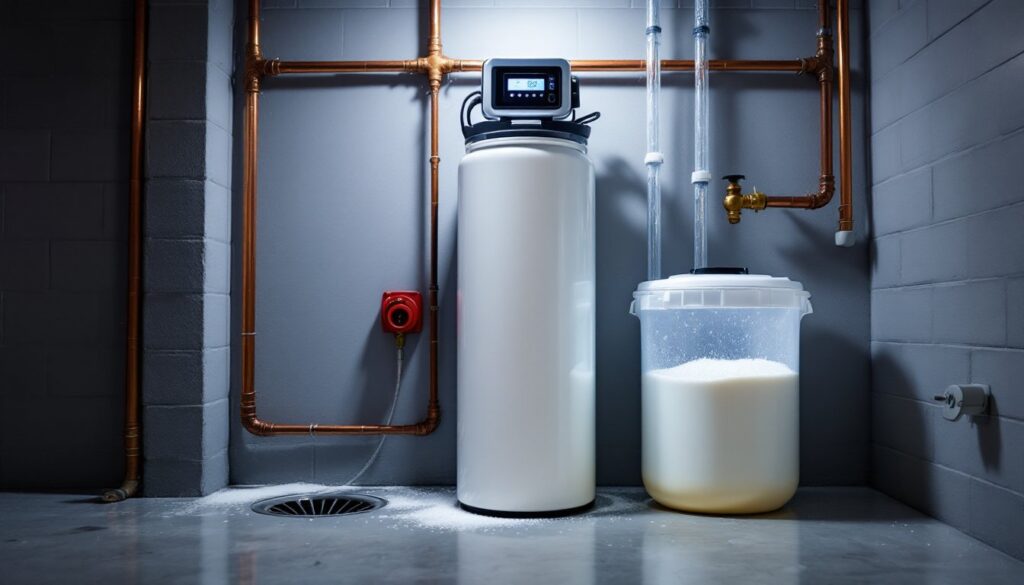
Step 3: Check the salt tank. Break up any salt bridges with a broom handle. Confirm the water level is about 6–12 inches below the top of the salt. If it’s too high, the float valve may be stuck or the drain is clogged.
Step 4: Clean the venturi and injector. These are usually accessible without major disassembly. Remove the cover, unscrew the venturi assembly, soak it in vinegar for 15 minutes, rinse, and reassemble. Wear nitrile gloves to avoid salt and mineral irritation.
Step 5: Manually cycle the system. Advance the valve through a full regeneration while watching and listening. Note where the noise occurs. Does it grind during a specific cycle? That tells you whether the issue is in the backwash valve, brine valve, or rinse cycle.
Step 6: Inspect seals and O-rings. Over time, these dry out, crack, or get fouled with mineral deposits. Replacement seal kits are inexpensive and available for most brands. Keep a service manual on hand, brands like Fleck and Clack have exploded parts diagrams online.
Step 7: Test water pressure. Use a pressure gauge on a hose bib before and after the softener. A significant drop across the softener suggests internal restriction.
If you’ve worked through these steps and the noise persists, the issue is likely internal to the control valve or motor assembly, which brings us to professional help.
When to Call a Professional for Water Softener Repairs
Most noise issues are DIY-friendly, but some warrant a pro, especially if you’re not comfortable with plumbing or electrical work.
Call a service tech if:
- The motor hums constantly without turning, and manual cycling doesn’t free it. This usually means internal mechanical failure or electrical issues.
- You see water leaking from the control valve body or tank seals. A weeping valve can turn into a flood.
- The softener is under warranty. DIY repairs can void coverage.
- You’ve replaced common wear parts (seals, injector, venturi) and the noise continues. It may need a full valve rebuild or resin replacement.
- The unit is more than 15 years old and showing multiple symptoms (noise, leaks, poor softening). Replacement is often more cost-effective than extensive repairs.
Professionals carry specialized tools (torque wrenches for control valve nuts, resin tank extractors) and can diagnose electronic control boards that DIYers can’t easily test. Expect service calls to run $150–$300 depending on region and complexity. If a full control valve replacement is needed, that’s typically $200–$400 in parts plus labor.
For routine maintenance and DIY plumbing guidance, resources like Family Handyman offer step-by-step tutorials that can help build confidence before tackling softener repairs.
Before calling, have your model and serial number ready (usually on a label inside the salt tank or on the control head). This speeds up parts identification and diagnostic questions.
Conclusion
A water softener making loud noise is rarely a catastrophe, but it’s always a message. Whether it’s a stuck valve, a clogged injector, or just poorly secured drain tubing, identifying the sound and its timing gives you the roadmap to a fix. Most homeowners can handle venturi cleaning, drain line adjustments, and simple seal replacements with basic tools and an hour of time. When motor gears strip or control valves fail, bring in a pro. Either way, you’ll restore quiet operation and keep your softener running efficiently for years.