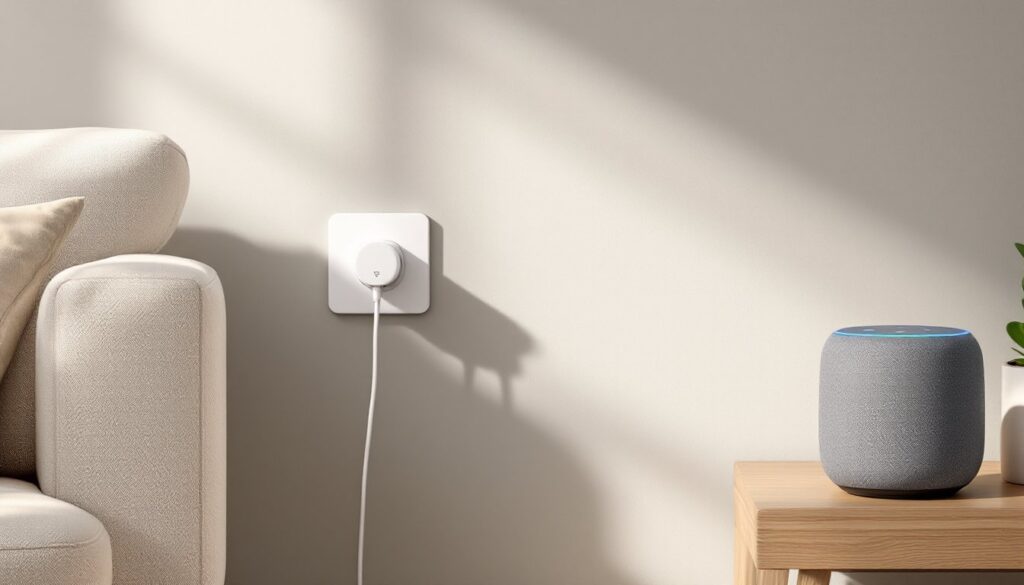
Smart plugs are the gateway drug to home automation. They’re cheap, dead simple to install, and they turn any dumb appliance into something you can boss around with your voice. If you’ve got a Google Home speaker or display sitting on your counter, adding smart plugs is the easiest way to get real utility out of it without rewiring a single switch. Within ten minutes, you can tell Google to turn off the coffee maker, kill the box fan in the bedroom, or light up a lamp from your couch. No electrician required, no hub to configure, just plug, tap, talk.
Table of Contents
ToggleKey Takeaways
- Smart plugs paired with Google Home enable voice-controlled power management for any device, turning existing appliances into smart-enabled tools without rewiring or hiring an electrician.
- Setup takes minutes—choose a location near your Wi-Fi router, plug in the device, connect through the Google Home app, and name it for voice control compatibility.
- Energy monitoring features in modern smart plugs track real-time wattage and usage costs, helping you identify power-hungry appliances and catch failing devices early.
- Smart plugs work best with mechanical switches on appliances like coffee makers and fans; most modern electronics with touchscreen controls won’t resume operation after losing power.
- Creative applications include automating laundry notifications, scheduling HVAC units to precool spaces, maintaining aquarium light cycles, and controlling holiday lighting all through a single Google Home command.
- Popular 2026 models like the Kasa Smart Plug Mini, TP-Link Kasa Slim, and Matter-certified options cost $12–$30 and offer reliable compatibility across Google Home, Alexa, and other ecosystems.
What Is a Smart Plug and How Does It Work with Google Home?
A smart plug is a Wi-Fi-enabled adapter that sits between your wall outlet and any device with a standard plug. It doesn’t change what the device does, it just gives you remote control over whether power flows to it. Most models connect to your home’s 2.4 GHz Wi-Fi network (5 GHz support is still rare as of 2026) and communicate with a companion app on your phone.
When you pair a smart plug with Google Home, you’re linking it to Google’s Assistant ecosystem. That means you can control the plug by voice through any Google Nest speaker, Nest Hub display, or even your phone’s Assistant. The plug shows up as a device in the Google Home app, where you can toggle it on or off, add it to routines, or group it with other smart devices in a room.
Under the hood, your voice command travels from the Google Home device to Google’s cloud servers, which then send a signal back to the smart plug over your Wi-Fi network. The whole loop happens in under a second. Most plugs also track energy usage, handy if you’re trying to figure out which appliance is spiking your electric bill.
Compatibility note: Not all smart plugs work with Google Home out of the box. Look for packaging or specs that say “Works with Google Assistant” or “Matter certified.” Matter is the new universal smart home standard rolling out industry-wide, and it makes setup even smoother since you don’t need a separate manufacturer app for most functions.
Key Benefits of Using Smart Plugs with Google Home
Voice control is the obvious win. Saying “Hey Google, turn off the porch light” beats fumbling for a switch in the dark. But the real power shows up in routines and automation.
Scheduling lets you set appliances to turn on or off at specific times. A box fan can kick on thirty minutes before bed and shut off an hour after you’re asleep. Holiday lights can turn on at sunset and off at 11 p.m. without you lifting a finger. You set it once in the Google Home app and forget it.
Remote access means you can control devices from anywhere with cell service. Forgot to turn off the curling iron? Kill it from the grocery store. Want the space heater warming up your workshop before you get home? Flip it on from the driveway.
Energy monitoring is built into many 2026 models. You’ll see real-time wattage and cumulative kilowatt-hour usage in the app. Plug in an old dehumidifier or window AC unit, and you’ll know exactly what it’s costing you per month. Some plugs will even send alerts if a device draws abnormal power, useful for catching a failing appliance early.
Safety gets a boost, too. You can set automatic shutoffs for heat-producing devices like space heaters, irons, or coffee makers. If you’re the type who second-guesses whether you unplugged the flat iron, smart plugs end that anxiety.
Finally, smart plugs extend the life of non-smart gear. Instead of replacing a perfectly good lamp or fan with a pricey smart version, you spend $15–$30 on a plug and keep what you’ve got.
How to Set Up Your Smart Plug with Google Home
Step-by-Step Installation and Connection Process
1. Choose a location near your Wi-Fi router for initial setup. Most smart plugs need a decent signal during pairing. You can move them afterward, but start close to avoid headaches.
2. Plug the smart plug into a wall outlet. Avoid power strips or extension cords during setup, some plugs won’t initialize properly if they’re not pulling clean power. The indicator light should blink or pulse, signaling it’s in pairing mode. If it doesn’t, hold the button on the plug for 5–10 seconds to reset it.
3. Download the manufacturer’s app (if required). Many 2026 models with Matter support skip this step entirely and pair directly through Google Home, but older Wi-Fi-only plugs still need their own app first. Follow the in-app prompts to connect the plug to your 2.4 GHz network. You’ll usually select your network name and enter the password.
4. Open the Google Home app on your phone. Tap the “+” icon in the top left, then choose “Set up device” and “Works with Google.” Search for your plug’s brand (TP-Link, Kasa, Wemo, etc.) or select it from the list of discovered devices if it’s Matter-certified.
5. Sign in to the manufacturer’s account (if prompted) or allow Google Home to link the device. The plug should appear in your device list within a few seconds.
6. Assign the plug to a room (bedroom, living room, garage, etc.). This lets you control multiple devices at once with commands like “Hey Google, turn off the bedroom.”
7. Rename the plug to something you’ll actually say out loud. “Bedroom lamp” works. “TP-Link smart plug Kasa model KP115” does not.
8. Test it. Plug in a lamp or fan and use a voice command: “Hey Google, turn on the bedroom lamp.” If it responds, you’re golden. If not, check that the plug has a solid (not blinking) Wi-Fi indicator and that your phone and Google Home device are on the same network.
Pro tip: If you’re setting up multiple plugs, do them one at a time and label each immediately. Trying to figure out which of four identical “Smart Plug 1” entries controls the garage freezer is maddening.
Best Smart Plugs Compatible with Google Home in 2026
Kasa Smart Plug Mini (EP25) remains a top pick for most users. It’s compact enough that two fit side-by-side in a duplex outlet, pulls real-time energy data, and pairs with Google Home in under two minutes. Kasa’s app is clean and responsive, and the plug consistently gets firmware updates. Rated for 15 amps, it handles most household devices shy of window AC units or space heaters north of 1,800 watts.
TP-Link Kasa Smart Wi-Fi Plug Slim (EP10) is the budget option, usually under $20 for a two-pack. No energy monitoring, but it’s bulletproof reliable for lamps, fans, and low-draw appliances. The slim profile doesn’t block the second outlet, which is clutch in tight spaces behind furniture.
Wemo Smart Plug (2026 edition) added Matter support this year, making it genuinely platform-agnostic. It works equally well with Google Home, Alexa, or Apple HomeKit without separate apps or accounts. It’s bulkier than the Kasa Mini and costs a few bucks more, but the flexibility is worth it if you’re not locked into one ecosystem.
Govee Smart Plug stands out for outdoor use. IP44-rated casing shrugs off rain and dust, and it has two independently controlled outlets. Perfect for string lights and a bug zapper on the back porch, or a fountain pump and landscape lights in the yard. Works with Google Home via the Govee app, and some models include energy monitoring.
Meross Smart Plug is the dark horse. Cheaper than Kasa, supports Matter, includes energy monitoring, and runs routines locally when possible (faster response, less reliance on cloud servers). The catch: customer support is hit-or-miss, and firmware updates are less frequent. Still, for $12–$15 per plug, it’s hard to beat if you’re outfitting a whole house.
For a broader look at how these and other models stack up across ecosystems, resources like Tom’s Guide’s annual smart plug roundup provide detailed head-to-head comparisons.
Creative Ways to Use Smart Plugs Throughout Your Home
Basement and garage workshops benefit from voice-controlled work lights and dust collection. Wire a shop vac to a smart plug, and you can kill it from across the room when your hands are full of boards. Add a routine that turns on overhead LED strips and a space heater fifteen minutes before you head downstairs in the morning.
Laundry rooms get smarter with a plug on the washer or dryer. When the cycle finishes and power draw drops to zero, the plug can trigger a Google Home notification or flash a smart bulb in another room. No more forgotten wet towels turning sour in the drum.
Window AC units and portable heaters are prime candidates. Both draw serious amps (check the plug’s rating, most max out at 15 amps or 1,800 watts), but scheduling them to preheat or precool a room saves energy and wear on the compressor. Just confirm your plug is rated for resistive loads: some cheaper models aren’t spec’d for inductive motor loads and will overheat.
Aquariums and reptile tanks need consistent light and heat cycles. A smart plug maintains the schedule even if you’re out of town, and you can monitor power usage to catch a failing heater before it cooks your fish. Many enthusiasts writing about home tech setups recommend this as an easy reliability upgrade over mechanical timers.
Holiday and seasonal lighting is the classic use case, but don’t stop at the tree. Plug in inflatable yard decorations, pathway lights, or a window candle display. Group them all in the Google Home app under “Holiday Lights,” and one command controls the whole show.
Soundproofing and white noise machines can follow sleep routines. Tell Google Home to turn on the bedroom fan and noise machine at 10 p.m., then shut them off at 6 a.m. Pair it with smart bulbs, and you’ve got a full “goodnight” routine without touching a switch.
Kitchen countertop appliances like coffee makers, toasters, and electric kettles work if they have mechanical switches (the kind that stay in the “on” position). Most modern appliances with electronic controls won’t power back on after losing electricity, so test before you commit. An older Mr. Coffee with a toggle switch? Perfect. A touchscreen espresso machine? Probably not.
DIY projects open up once you’re comfortable with smart plugs. Builders discussing setups in venues like Popular Mechanics often pair plugs with relay boards and low-voltage sensors to automate everything from chicken coop doors to hydroponic pumps. You’re not voiding any electrical codes since the plug itself remains a listed device, you’re just controlling what plugs into it.
Conclusion
Smart plugs won’t rewire your house, but they’ll make the house you’ve got a whole lot easier to live in. Start with one or two in high-traffic rooms, get the routines dialed in, and expand from there. The beauty of this tech is that it scales at your pace, no commitment, no contractor, no drywall dust. Just plug in, speak up, and let Google do the legwork.