Shopping for smart home installation services can feel like navigating a maze. Between platforms that promise DIY simplicity and contractors who quote multi-thousand-dollar packages, it’s hard to know where a homeowner actually needs help. The truth is, some smart devices snap into place in minutes, while others require low-voltage wiring knowledge, network configuration, or even minor electrical work. Hiring the right professional, or skipping one when you don’t need it, comes down to understanding the scope of your project and the skills required to pull it off safely and reliably.
Table of Contents
ToggleKey Takeaways
- Smart home installation services range from plug-and-play device setup to complex whole-home system integration, with professional help needed for electrical work, low-voltage wiring, network infrastructure, and structural modifications.
- Hire a licensed professional for any smart home installation requiring line-voltage electrical work, such as smart switches and thermostats, to ensure code compliance and safety.
- When searching for smart home installation services near me, verify contractor credentials including electrical licenses, manufacturer certifications (like CEDIA membership), and relevant references for smart home projects specifically.
- Basic smart home setups typically cost $2,000–$4,000 for whole-home lighting control, while comprehensive systems with motorized shades and integrated automation can range from $10,000–$50,000+ depending on complexity.
- Before hiring a smart home installer, confirm they assess your network infrastructure, pull required permits, provide warranties on labor, offer ongoing support, and implement network security measures like separate IoT Wi-Fi networks.
What Are Smart Home Installation Services?
Smart home installation services cover the setup, configuration, and integration of connected devices throughout a residence. These range from simple plug-and-play gadgets, like smart bulbs and voice assistants, to complex whole-home systems involving motorized blinds, multi-zone HVAC controls, networked security cameras, and centralized hubs.
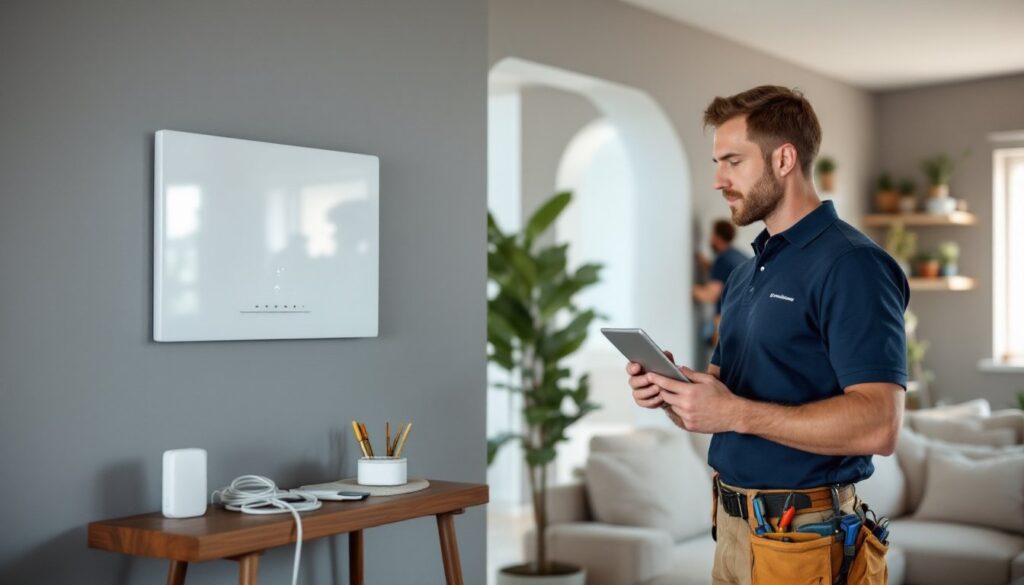
A professional installer typically handles device mounting, wiring (both low-voltage and line-voltage where permitted), network setup, app configuration, and cross-device integration. Some installers specialize in specific ecosystems (Google Home, Amazon Alexa, Apple HomeKit), while others work across platforms or focus on proprietary systems like Control4 or Crestron.
Services often include site assessment, where the installer evaluates Wi-Fi coverage, existing electrical infrastructure, and structural considerations like wall types and attic access. For devices requiring hardwiring, such as wired security systems, smart thermostats replacing line-voltage models, or in-wall touch panels, many states require a licensed electrician to perform the final connections, even if a smart home tech does the programming.
Beyond installation, many pros offer ongoing support: firmware updates, troubleshooting connectivity issues, expanding the system, or integrating new devices as they’re released. Comprehensive installations often involve creating automation scenes (e.g., “Good Morning” routines that adjust lights, blinds, and temperature simultaneously) and ensuring devices communicate reliably across the home network.
When to Hire a Professional vs. DIY Smart Home Setup
Most battery-powered or plug-in smart devices, like smart speakers, video doorbells with existing doorbell wiring, or Wi-Fi-enabled outlets, are legitimate DIY territory. If the manufacturer’s instructions don’t mention cutting drywall, running cable, or working inside a breaker panel, you’re probably fine handling it yourself.
Hire a professional when:
-
Electrical work is required. Replacing a standard light switch with a smart switch involves working with line-voltage wiring (120V). Even if it’s technically a simple swap, local codes often require a licensed electrician to perform the work, especially in jurisdictions enforcing the National Electrical Code (NEC). Same goes for hardwired smart thermostats, ceiling fan controllers, or any fixture tied directly to household circuits.
-
Low-voltage wiring needs to be run. Installing wired security cameras, whole-home audio, or ethernet drops for reliable smart device connectivity often means fishing cable through walls, attics, or crawl spaces. A pro will know how to avoid drilling into studs with plumbing or existing wiring, and they’ll use proper plenum-rated cable in HVAC spaces where fire code requires it.
-
Network infrastructure is weak or complex. If your home has Wi-Fi dead zones, thick exterior walls (common in older brick or stucco construction), or you’re installing 20+ connected devices, you’ll likely need a mesh network or hardwired access points. A smart home installer or IT professional can map coverage, configure VLANs to isolate IoT devices from personal devices, and ensure bandwidth won’t bottleneck.
-
Integration across platforms is a priority. Getting devices from different manufacturers to play nicely, especially when building automation routines that involve Z-Wave, Zigbee, Thread, and Wi-Fi devices simultaneously, can be a headache. Professionals familiar with home automation efficiency know which hubs support cross-protocol communication and how to script reliable scenes.
-
The project involves structural modifications. Recessing speakers, installing motorized window treatments with in-wall controls, or retrofitting smart blinds automation into custom casings may require carpentry, patching drywall, or modifying trim. If you’re not comfortable with finish work, hire it out.
Safety note: Any work inside a breaker panel or involving circuits over 50 volts should be handled by a licensed electrician. DIYing electrical without proper knowledge can result in shock, fire hazards, or code violations that complicate home sales or insurance claims.
How to Find Qualified Smart Home Installers in Your Area
Start with platform-specific directories. If you’re committed to a particular ecosystem, manufacturers often maintain installer networks: look for certified professionals through programs like Lutron Pros, Savant dealers, or Control4 authorized installers. These pros have product-specific training and access to technical support channels that independent installers may not.
General contractor platforms like HomeAdvisor and ImproveNet let you filter by service type and read verified customer reviews. When searching, use terms like “smart home integration,” “home automation,” or “low-voltage wiring” to surface specialists rather than general handymen.
Check credentials:
- Electrical licenses (required in most states for line-voltage work). Verify license status through your state’s contractor licensing board.
- Low-voltage or telecommunications licenses (required in some jurisdictions for running data/AV cable).
- CEDIA membership (Custom Electronic Design & Installation Association). Members typically have formal training in home technology integration.
- Manufacturer certifications for the brands you’re installing. A Ring Pro installer will know Ring-specific quirks: a Google Nest certified pro has direct support channels.
Ask for references specific to smart home work, not just general electrical or remodeling jobs. A great electrician isn’t automatically skilled at configuring mesh networks or troubleshooting Zigbee pairing issues.
Request a site visit before quoting. Installers who provide estimates sight-unseen often miss critical details, like knob-and-tube wiring in older homes, inadequate attic access, or Wi-Fi interference from neighboring networks. A thorough walkthrough should include discussion of your router/modem setup, existing device inventory, and long-term expansion plans.
Red flags: Contractors unwilling to pull permits when required, anyone claiming all smart devices are “plug-and-play” without assessing your home’s infrastructure, or installers who can’t explain why they recommend specific products over alternatives.
What to Expect: Installation Process and Costs
Typical Installation Timeline
A basic installation, say, a smart thermostat replacement and a handful of smart switches, can usually be completed in 2–4 hours if the existing wiring is compatible and the electrical panel is accessible. Expect an electrician to confirm that your HVAC system matches the thermostat’s voltage requirements (most are 24V, but some older systems or high-voltage baseboard heaters require line-voltage models).
A mid-range whole-home setup, covering lighting control in 8–10 rooms, a video doorbell, smart locks, a hub, and basic automation, typically takes 1–2 days. This includes running any necessary low-voltage wire, mounting devices, network configuration, and walking the homeowner through app setup and voice commands.
Comprehensive installations with wired security cameras, whole-home audio, motorized shades, and integrated HVAC/lighting scenes can stretch to 3–5 days or more. Projects requiring drywall patching, painting, or coordination with other trades (like HVAC techs for duct dampers or home sensor systems integration) add time.
Timeline variables:
- Permit processing (1–2 weeks in many jurisdictions if electrical permits are required).
- Product lead times (some smart home components, especially motorized window treatments or custom panels, can have 4–8 week shipping windows).
- Home construction type (running cable in a slab-on-grade home is slower than a house with a basement or accessible crawl space).
Average Pricing for Smart Home Services
Pricing varies widely by region, complexity, and whether you’re hiring a licensed electrician, a dedicated smart home integrator, or a general tech installer.
Electrician rates for smart device installation typically run $75–$150/hour, depending on location and licensing level (master electricians command higher rates). Simple device swaps might be quoted as flat fees: $100–$200 for a smart thermostat install, $50–$100 per smart switch, or $150–$300 for a video doorbell with chime integration.
Dedicated smart home installers often charge $100–$200/hour or offer package pricing. A whole-home lighting package (hub + 15 switches/dimmers) might run $2,000–$4,000 including labor. Adding motorized shades can jump to $500–$1,200 per window depending on size, fabric, and motor quality.
Comprehensive systems with centralized control (like Control4 or Savant) start around $10,000–$15,000 for moderate-sized homes and can exceed $50,000 for luxury installations with custom programming, in-wall touchscreens, and multi-room AV.
Don’t forget ongoing costs. Some installers offer service contracts ($200–$500/year) covering firmware updates, troubleshooting, and system expansions. Subscription fees for cloud storage (security cameras), professional monitoring, or premium app features add $5–$30/month per service.
Cost-saving tips: Purchasing devices yourself during sales (Black Friday, Prime Day) can cut material costs by 20–40%, but confirm your installer will warranty work on customer-supplied equipment. Bundling multiple rooms or systems in one project often gets you better labor rates than piecemeal additions. For smart home energy savings, prioritize devices with the highest utility impact, smart thermostats and lighting timers typically pay for themselves in 1–3 years.
Questions to Ask Before Hiring an Installer
“What licenses and insurance do you carry?” Verify they have appropriate electrical or low-voltage licenses for your jurisdiction, plus general liability and workers’ comp insurance. Ask for proof, don’t just take their word.
“Have you installed [specific product/system] before?” Experience with your exact devices matters. A pro who’s installed 50 Lutron Caseta systems will troubleshoot pairing issues faster than someone learning on your dime. According to guidance from Angi’s home automation specialists, product familiarity significantly impacts installation quality and long-term reliability.
“Will you pull permits if required?” Some municipalities require electrical permits even for simple switch replacements. An installer who skips permitting exposes you to liability and potential issues during home sales or insurance claims.
“How do you handle Wi-Fi dead zones or network issues?” If they don’t assess your existing network during the estimate, that’s a warning sign. Reliable powerful home tech depends on solid connectivity, ask whether they recommend mesh systems, additional access points, or hardwired backhaul.
“What’s included in your warranty?” Differentiate between manufacturer warranties (on the devices themselves) and labor warranties (on the installation). A one-year labor warranty is standard: anything less should raise questions.
“Can you integrate with my existing devices?” If you already have smart products, confirm the installer can fold them into the new system. Some proprietary platforms don’t play well with others, know the limitations upfront.
“Do you provide training and documentation?” You should leave the job knowing how to control devices via app and voice, create basic automation, and troubleshoot common issues. Ask if they provide written instructions or video walkthroughs for your specific setup.
“What happens if a device fails or needs an update?” Clarify whether they offer ongoing support, charge service-call rates, or expect you to handle routine maintenance. Some pros include a certain number of follow-up visits: others charge $100–$150 per trip.
“How do you protect my network security?” Installers should create separate Wi-Fi networks (or VLANs) for IoT devices, use strong passwords, enable two-factor authentication where available, and disable unnecessary features (like remote access on cameras if you don’t need it). Any pro who doesn’t mention security isn’t thinking long-term.
Finally, trust your gut. A good installer will explain trade-offs, offer alternatives at different price points, and never pressure you into proprietary systems that lock you into one vendor. They’re there to solve problems, not upsell features you’ll never use.